the narrator asks to leave the house
The Yellow Wall PaperThe narrator asks to leave the house when the room and its wallpaper have become part of an increasingly distressing experience that John dismisses as illness-induced fancy. The request is a turning point in the conflict between her report of suffering and his medical authority: she names a failure to improve, but he answers with his own assessment, practical constraints, and reassurance, and she is unable to press the matter further.
Background: The Room and the Rest Cure
The request grows out of a living arrangement that the narrator did not choose. She wanted a downstairs room opening onto the piazza, with roses at the window and old-fashioned chintz hangings. John insisted instead on the top-floor nursery because, he said, the couple needed a room with space for two beds and a nearby room for him. He described the move as being solely for her benefit and prescribed rest and abundant air; she recognizes that he is careful and loving, but also says that his hourly schedule takes all care from her.
The upstairs nursery is large and airy, with windows facing in several directions, but its institutional and restrictive features complicate its promise of recovery. The windows are barred for children, and rings are fixed in the walls; patches of paper have already been stripped away near the bed and low on the opposite side. The narrator calls the wallpaper atrocious and finds its sprawling pattern deeply irritating. Her later wish to leave therefore concerns more than a change of scenery: it arises within a room assigned as treatment, where the conditions of care also limit her choice and shape what she can see and do.
Why She Asks to Leave
John does not believe that she is sick in the way she understands herself to be. He accepts the view that her condition is temporary nervous depression, and his professional confidence reinforces his refusal to treat her account as decisive. The narrator says that John does not know how much she really suffers; knowing that he sees no reason for that suffering is enough to satisfy him. Her request emerges from this mismatch between her experience and the explanation he accepts.
The narrator also wants to write, believing that writing might relieve the pressure of her ideas, but she tires when she tries and lacks advice or companionship about her work. John has told her that she should not have stimulating visitors until she is well. Against this background, her wish to be taken away is both a direct appeal for a different setting and part of a broader effort to find relief from a regimen that leaves little room for her own judgment or self-expression.
By the time she makes the request, the wallpaper has acquired a disturbing human figure for her. She says it is like a woman stooping and creeping behind the pattern, and the sight prompts her to wonder whether John will take her away. The movement from a disliked room to a request for removal is thus closely tied to the growing force of this perception. The text presents her fear as something she attempts to disclose, not as evidence that John accepts her account.
The Conversation and John's Refusal
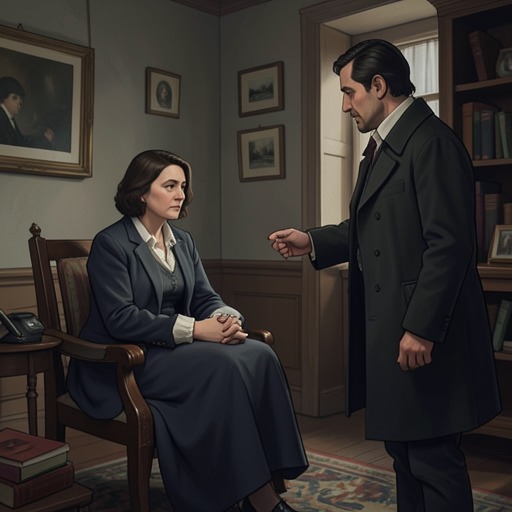
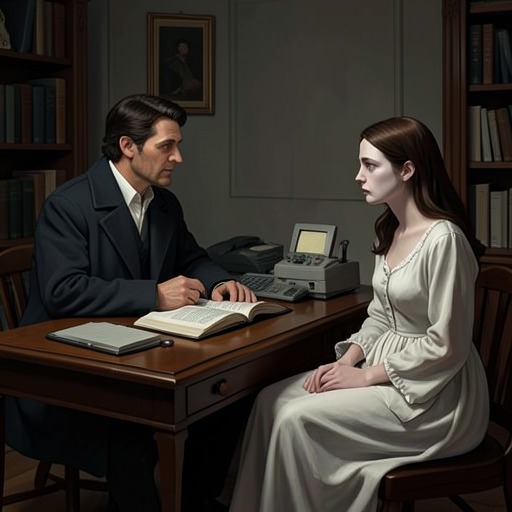
The conversation begins at night, after the narrator gets up quietly to test whether the paper moves and returns to find John awake. She tells him that she is not gaining at the house and wishes he would take her away. John answers that the lease has three weeks left and that the repairs at home are unfinished; he also says he cannot leave town at that moment. He presents these obstacles as practical reasons to stay, while making an exception only for a situation he himself judges dangerous.
John then asserts that she is improving whether she can see it or not. He cites her supposed gain in flesh and color, a better appetite, and his own feeling of being more at ease. The narrator counters with details from her own experience: she says she weighs no more, or less, and that her appetite is worse in the morning when he is away, despite seeming better in the evening when he is present. Their disagreement is therefore not simply over whether she feels unwell. It is over which observations count: John treats his medical assessment and visible signs as conclusive, while she describes changes he does not witness.
When the narrator begins to distinguish physical improvement from another kind of distress, John sits upright and looks at her sternly and reproachfully. He invokes her, his own sake, and their child, and tells her not to let the idea enter her mind. He labels the thought a false and foolish fancy and asks her to trust him as a physician. The appeal to family affection and professional expertise closes down the conversation rather than opening space for her to explain what is wrong.
The refusal is softened by John’s affectionate manner but remains a refusal. He hugs her, jokes that she may be as sick as she pleases, and proposes that they sleep and speak in the morning. He says that once the three weeks are over, they can take a short trip while Jennie prepares the house. Yet this promised future outing does not meet the immediate request to leave the house, and his certainty that she is better remains unchanged.
Aftermath and Significance
The narrator says no more on the subject, and they soon go to sleep. John believes that she has fallen asleep first; in fact, she lies awake for hours, trying to determine whether the wallpaper’s front and back patterns move together or separately. The conversation has ended outwardly, but it has not settled her concern. His dismissal leaves her alone with the question that the exchange had brought into sharper focus.
The request also marks a divergence between John’s account of recovery and the narrator’s. He reads weight, color, appetite, and his own reduced worry as evidence of improvement; she disputes those signs and distinguishes bodily condition from the distress she has tried to raise. Because he controls the treatment and determines whether the situation is serious enough to warrant leaving, her request cannot by itself change the conditions she objects to.
Her later conduct makes the limits of that failed appeal more visible. She reports locking the door when she creeps by daylight, because she does not want John to suspect what she is doing, and eventually locks the door and throws the key down into the front path so that no one can come in before John arrives. These later details do not show that the earlier request succeeded; instead, they place it against a growing pattern of secrecy and self-directed action. The episode’s decisive significance lies in that contrast: when she asks openly to be taken away, John’s judgment and practical arrangements prevail, while her unaccepted account continues to intensify behind the nursery’s wallpaper.